

Eurogamersonline: The Different Types of Content and Coverage Explained
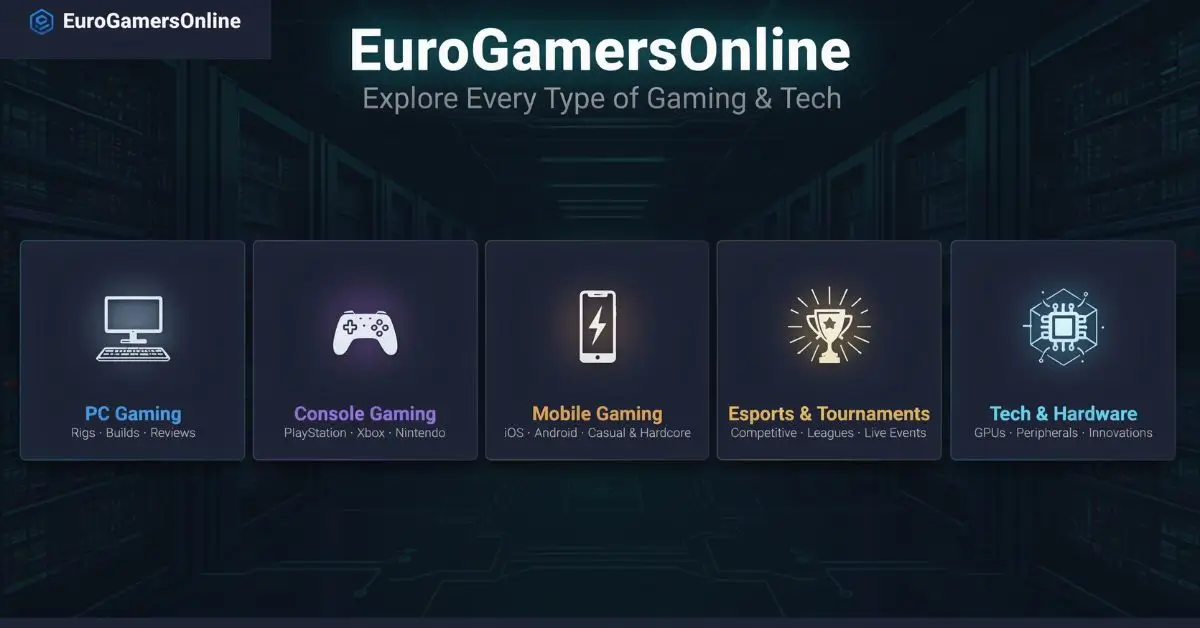
When you first land on a platform like Eurogamers Online, the range of content can feel broad. Gaming hardware, tech reviews, platform comparisons, game coverage, gear guides — it covers a lot of ground. For a new visitor, that breadth can be either reassuring or confusing, depending on what you came looking for.
The problem most readers face with multi-category platforms is not knowing where to start. If you’re interested in gaming monitors, you don’t need to wade through mobile accessory reviews to find what’s relevant. If you want to understand the different types of content the platform covers — so you can navigate it more effectively — you need a clear map, not just a homepage.
That’s what this guide provides. It breaks down eurogamersonline the different types of coverage the platform delivers — each category explained clearly, with context on what it covers, who it serves, and how it fits into the broader picture of gaming and technology content online.
By the end, you’ll have a complete understanding of the platform’s content landscape and know exactly where to look for whatever you need.
Eurogamersonline the different types refers to the distinct categories of gaming and technology content covered by the Eurogamers Online platform — spanning hardware reviews, game coverage, peripheral guides, platform comparisons, mobile tech, audio equipment, and broader consumer electronics — each serving a different segment of the gaming and tech-interested audience with specific, focused information.
Quick Summary
Eurogamers Online covers multiple distinct content types — from gaming hardware and peripherals to game reviews, tech comparisons, and consumer electronics. This guide breaks down each type clearly so you know exactly what the platform offers and where to find what you need.
Why Understanding Content Types Matters
Before diving into the specific categories, it’s worth explaining why this breakdown is useful in the first place.
Gaming and technology platforms that cover multiple content types serve different readers with different needs. A competitive esports player researching a new mouse has completely different requirements from a casual gamer looking for a couch-friendly controller or a tech enthusiast comparing wireless earbuds.
Understanding eurogamersonline the different types of content it produces helps you use the platform more efficiently. You know which section to navigate to, which type of review methodology applies to your decision, and which content is written for your specific use case rather than a different audience entirely.
This kind of orientation is what turns a good platform into a genuinely useful one for your specific situation.
Type 1: Gaming Hardware Reviews
Gaming hardware is the most prominent content type on Eurogamers Online and the category where the platform’s technical depth is most evident.
This category covers the physical components and devices that make up a gaming setup. The coverage goes well beyond spec lists — it addresses real-world performance, build quality, software support, and long-term reliability.
What falls into this category:
- Gaming desktop PCs and laptops
- Graphics cards and processors relevant to gaming performance
- Gaming monitors across panel types and refresh rate categories
- Internal storage — SSDs and their impact on game load times
- Gaming chairs and desk setups for long-session comfort
The distinguishing feature of strong hardware coverage is that it connects specifications to actual gaming outcomes. A GPU review that explains what frame rates you’ll actually get in specific games at specific settings is more useful than one that recites benchmark scores without context.
This type of content serves readers who are building, upgrading, or evaluating a full gaming system rather than just individual peripherals.
Type 2: Peripheral Reviews and Buying Guides
Peripherals are the second major content type, and for many readers, the most immediately practical.
This category covers the devices you interact with directly during gameplay — and the quality of those interactions affects performance in measurable, consistent ways.
What this type covers:
- Gaming mice — sensor type, weight, polling rate, grip compatibility
- Mechanical keyboards — switch types, build quality, software, noise level
- Gaming headsets — sound positioning, microphone quality, comfort, wireless performance
- Controllers and gamepads — button feel, trigger sensitivity, platform compatibility
- Mousepads and desk accessories — surface texture, size, and how they affect mouse performance
Peripheral content at its best is deeply specific. A mouse review that doesn’t address grip style is missing essential information. A headset review that doesn’t distinguish between gaming performance and music listening quality isn’t giving you the full picture.
The buying guide format within this category is particularly valuable — it compares multiple options across a price range, helping readers find the best choice at their specific budget rather than just identifying the best product regardless of cost.
Type 3: Game Reviews and Coverage
Beyond hardware and peripherals, Eurogamers Online covers the games themselves — providing reviews, previews, genre guides, and ongoing coverage of major releases across platforms.
This content type serves readers who want informed opinions and practical information about games before spending money on them.
What this type includes:
- Full game reviews with honest assessment of gameplay, story, performance, and value
- Genre breakdowns — understanding what makes a game fit a specific genre and who that genre suits
- Platform-specific coverage — how a game performs on PC versus console, or which version is the better buy
- Early access and preview coverage — informed takes on games that aren’t fully released yet
- Game update and patch coverage — how post-launch changes affect the experience
Strong game reviews are honest about trade-offs. A game with a compelling story but poor performance optimization needs both facts stated clearly. A multiplayer game that’s excellent with friends but disappointing solo deserves that context prominently in the review.
Type 4: Platform and Console Comparisons
One of the most searched types of gaming content involves platform comparisons — helping readers decide between competing ecosystems, consoles, or gaming approaches.
This content type addresses the bigger picture decisions that affect every gaming purchase that follows.
What platform comparison content covers:
- Console comparisons — comparing current generation systems across game libraries, performance, price, and ecosystem features
- PC versus console — addressing the real trade-offs between the two approaches rather than giving a one-sided answer
- Gaming subscription services — comparing what different subscription platforms offer for the monthly cost
- Cloud gaming options — assessing how streaming-based gaming compares to local hardware in real-world conditions
- Operating system and launcher comparisons for PC gamers
This type of content requires genuine neutrality. Platform loyalty runs deep in gaming communities, and readers can tell when coverage favors one ecosystem over another without factual basis. The most useful platform comparisons acknowledge that the right answer depends on the reader’s priorities, not on an objective winner.
Type 5: Audio and Sound Technology
Audio deserves its own category in gaming content because it’s both technically complex and deeply personal — two qualities that make it easy to cover poorly and difficult to cover well.
Eurogamers Online addresses audio across gaming-specific and broader consumer contexts.
What audio coverage includes:
- Gaming headsets reviewed specifically for positional audio in competitive and single-player contexts
- Wireless earbuds evaluated for gaming latency as well as general audio quality
- Desktop speakers and monitor speakers for gaming setups
- DAC and amplifier equipment for audiophile-oriented gamers
- Microphone reviews for streaming, communication, and content creation
The key distinction in good audio coverage is that gaming audio and music audio are evaluated differently. A headset that produces excellent positional audio for competitive gaming may have a sound signature that audiophiles wouldn’t enjoy for music. Covering both aspects — and being clear about which matters most for which use case — is what makes audio content genuinely useful.
Type 6: Mobile Gaming and Portable Tech
Mobile gaming has grown into one of the largest gaming segments globally, and coverage of it represents a distinct content type with its own audience and requirements.
This category addresses gaming on smartphones, tablets, and portable dedicated gaming devices.
What mobile gaming coverage includes:
- Smartphone reviews evaluated specifically for gaming performance — display refresh rate, thermal management, touch response
- Mobile gaming accessories — controllers, cooling fans, stands, and charging solutions
- Portable gaming handhelds — dedicated gaming devices reviewed for library, battery life, and performance
- Mobile game coverage — reviews and guides for significant mobile game releases
- Cloud gaming on mobile — evaluating which streaming services work best on portable devices
A US-based reader upgrading their gaming phone needs different information than someone evaluating a dedicated handheld gaming device. Good mobile gaming coverage identifies the audience for each product clearly.
Type 7: Broader Consumer Tech and Lifestyle Gadgets
The seventh content type extends beyond pure gaming into the broader consumer technology space — covering products that gaming audiences care about even when they’re not exclusively gaming products.
What this category covers:
- Smartwatches and fitness trackers relevant to the gaming lifestyle
- Streaming devices and smart TV platforms used for gaming and entertainment
- Smart home tech that integrates with gaming setups
- Portable chargers, USB hubs, and connectivity accessories
- Productivity tech relevant to gamers who also work or create content
This type of coverage acknowledges that the gaming audience doesn’t only game. They work, travel, create content, and live in homes that benefit from the same technical intelligence they apply to gaming gear decisions.
Quick Reference: Content Types at a Glance
| Content Type | Primary Audience | Key Focus | Best For |
|---|---|---|---|
| Hardware Reviews | PC builders and upgraders | Performance and value | System purchase decisions |
| Peripheral Reviews | Active gamers | Real-world usability | Gear upgrades |
| Game Reviews | All gamers | Gameplay and value | Purchase decisions |
| Platform Comparisons | New or switching gamers | Ecosystem trade-offs | Platform choice |
| Audio Coverage | Headset and audio buyers | Sound quality and latency | Audio gear decisions |
| Mobile Gaming | Mobile and portable gamers | Performance and portability | Mobile setup decisions |
| Consumer Tech | Broader tech audience | Practical everyday use | Lifestyle tech purchases |
How to Navigate the Different Types Effectively
Knowing that eurogamersonline the different types exist is useful. Knowing how to navigate them efficiently is what saves time and gets you to the right information faster.
Use category filters or tags
Most platforms organize content by category. If you’re researching a peripheral, navigate directly to that section rather than scrolling through unrelated hardware reviews.
Match the content type to your decision stage
Platform comparisons are useful before you choose an ecosystem. Peripheral reviews are useful once you’ve chosen your platform and are building your setup. Game reviews are useful when deciding what to play next. Different types serve different stages of the decision process.
Read multiple pieces within one type
Reading several peripheral reviews — even for products you’re not buying — teaches you what matters in that category. You learn the vocabulary, the specs that actually affect performance, and the trade-offs that show up consistently. That knowledge makes every future decision in that category faster and better informed.
Conclusion
Understanding eurogamersonline the different types of content it covers transforms how you use the platform. Instead of browsing broadly and hoping to find what’s relevant, you navigate with purpose — going directly to the content type that matches your current decision or interest.
Every category serves a specific audience and a specific need. The more clearly you understand which type applies to you, the more value you get from every visit. If this guide helped you find your footing, explore more technology and gaming content on this site — there’s depth here across every category that matters to the gaming and tech audience.
Frequently Asked Questions
What content does Eurogamers Online cover?
Eurogamers Online features gaming hardware, peripherals, game reviews, platform comparisons, mobile gaming, audio technology, and consumer tech.
What’s the difference between hardware and peripheral reviews?
Hardware reviews focus on PCs, laptops, and components, while peripheral reviews cover keyboards, mice, headsets, and controllers.
Why is mobile gaming covered separately?
Mobile gaming has unique hardware, performance, and gameplay needs, making dedicated coverage more useful for players.
How can I find the right content on Eurogamers Online?
Choose the category that matches your needs, such as hardware, games, or buying guides, to quickly find relevant information.
Is gaming audio coverage different from regular audio reviews?
Yes. Gaming reviews focus on positional audio, microphone quality, latency, and long-session comfort.
Why does Eurogamers Online cover consumer tech?
Many gamers also use smart devices and productivity tools, so broader tech coverage helps readers make informed technology decisions.
[…] review stops you from making random purchases. It also helps you separate a real need from a temporary design […]
[…] understand the core ideas behind digital platforms, one must look at how virtual reward ecosystems function. When you participate in online networks, […]