

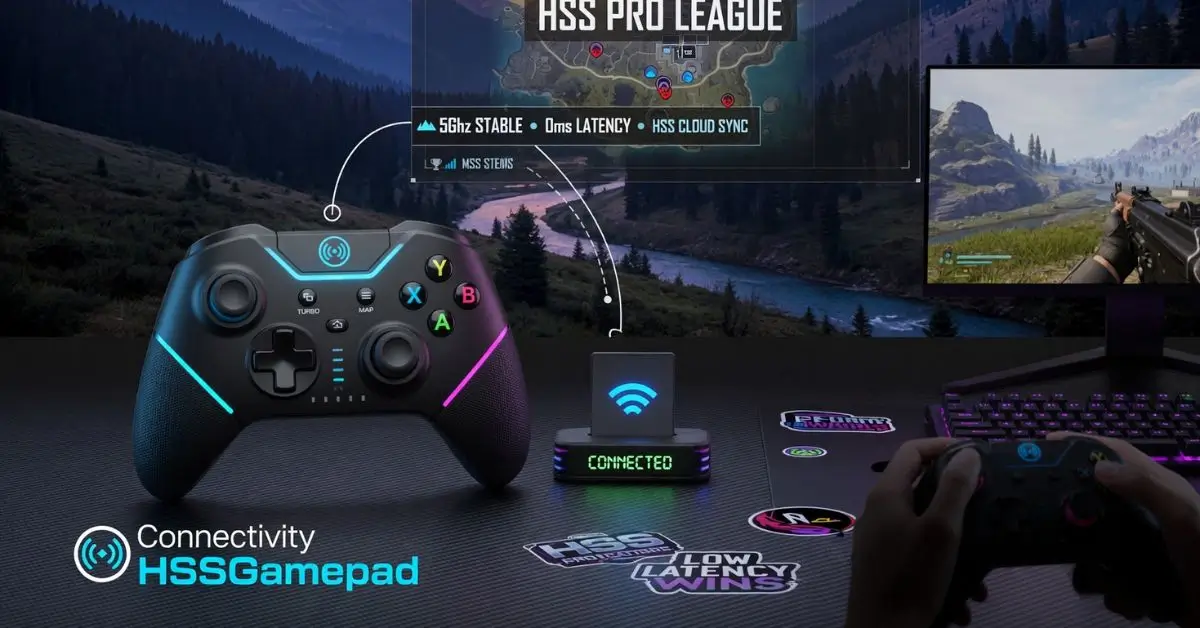
Connectivity HSSGamepad
Getting a gamepad connected properly sounds simple until it is not. You plug in your HSS gamepad, nothing happens. Or it connects, shows up in settings, and then refuses to work inside your game. Or it works perfectly wired but drops out every few minutes when you switch to Bluetooth.
Connectivity issues with gaming controllers are genuinely frustrating because they sit between you and the game you want to play. The problem is almost always solvable, but finding the right solution requires understanding which connection type you are using and what specifically is going wrong.
This guide covers everything you need to know about connectivity hssgamepad, from setting up each connection type correctly from the start to diagnosing and fixing the most common problems that affect wired, Bluetooth, and wireless dongle connections.
Connectivity hssgamepad refers to the methods and processes by which an HSS gamepad establishes a working connection with a host device such as a PC, console, smartphone, or tablet. This includes wired USB and USB-C connections, Bluetooth wireless pairing, and 2.4GHz wireless dongle connections. Each method has different setup requirements, performance characteristics, and potential failure points that affect how the gamepad functions during gameplay.
Quick Summary
HSS gamepad connectivity covers three main connection types: wired USB, Bluetooth, and 2.4GHz dongle. Wired is the most reliable and has the lowest latency. Bluetooth is the most flexible for multi-device use. The dongle offers wireless convenience with near-wired performance. Each has a specific setup process and common issues with specific fixes. This guide covers all three.
Understanding Your HSS Gamepad Connection Options
Before troubleshooting any connectivity issue, knowing which connection type your specific HSS gamepad model supports is the essential starting point.
HSS gamepads are produced in several variants. Some are wired only. Some support Bluetooth. Some include a 2.4GHz wireless dongle. Some support all three connection methods simultaneously with the ability to switch between them. Check your specific model’s packaging or manual to confirm what is available before assuming a connection type your device may not support.
The three connection types work very differently in terms of setup, performance, and the problems they encounter. Treating them as interchangeable leads to confusion. Each deserves its own setup approach.
Wired USB Connectivity: Setup and Performance
How It Works
A wired connection sends data directly through the USB cable from the gamepad to the host device. There is no wireless signal, no pairing process, and no battery management to worry about. Data travels at the speed of the cable and port, producing the lowest possible input latency of any connection method.
Setting Up a Wired HSS Gamepad Connection
Step 1: Use the correct cable for your model. USB-A to USB-C cables suit most modern HSS gamepads. Older models may use micro-USB. Confirm before purchasing a replacement cable.
Step 2: Connect the gamepad to a USB port directly on your PC or console. Avoid USB hubs for initial testing as some hubs do not provide sufficient power or bandwidth.
Step 3: Allow your operating system to detect the device. Windows 10 and 11 typically recognize HSS gamepads through generic HID drivers within a few seconds. A notification confirms detection.
Step 4: Open your game and check controller settings. Most modern PC games detect connected gamepads automatically. If yours does not, look for a controller or input settings menu where you can manually enable gamepad input.
Step 5: Test all buttons and analog sticks in the game’s calibration menu to confirm everything registers correctly before starting a session.
Wired Connection Performance
Wired HSS gamepad connectivity delivers the lowest input latency of any connection method, typically between 4 and 8 milliseconds. For competitive gaming where response time matters, wired is always the most reliable choice. It also eliminates battery concerns and interference issues entirely.
The trade-off is the cable itself. Cable length limits your range, the cable can wear over time especially at the connector ends, and cable management is an additional consideration for desk setups.
Bluetooth Connectivity: Setup and Considerations
How It Works
Bluetooth connects the gamepad wirelessly to your device through the standard Bluetooth radio protocol. The gamepad broadcasts its signal and pairs with your device through a handshake process. Once paired, it reconnects automatically when both devices are in range and both are active.
Setting Up Bluetooth on Your HSS Gamepad
Step 1: Put the gamepad into pairing mode. This typically requires holding a Bluetooth button or button combination for three to five seconds until an indicator light begins flashing rapidly. Consult your specific model’s manual for the exact method.
Step 2: Open Bluetooth settings on your PC, smartphone, or tablet. On Windows, go to Settings, then Bluetooth and devices. On Android or iOS, go to Settings, then Bluetooth.
Step 3: Scan for new devices and select your HSS gamepad from the list. The name typically includes HSS or a model number.
Step 4: Confirm pairing when prompted. The indicator light on the gamepad usually changes from rapid flashing to a slow pulse or solid light to confirm a successful connection.
Step 5: Test in your game or application. For PC gaming, confirm the game recognizes the Bluetooth gamepad in its controller settings.
Bluetooth Connection Performance
Bluetooth HSS gamepad connectivity offers flexibility that wired cannot match. You can connect to multiple devices and switch between them, use the gamepad from across the room, and avoid cable management entirely.
The performance trade-off is latency. Bluetooth connections typically add 10 to 30 milliseconds of latency compared to wired, depending on the Bluetooth version your device supports. Bluetooth 5.0 performs significantly better than older Bluetooth 4.0 connections. For casual gaming, this difference is barely noticeable. For competitive gaming, it can matter.
2.4GHz Wireless Dongle: Setup and Performance
How It Works
A 2.4GHz wireless dongle creates a dedicated wireless connection between the gamepad and the USB dongle plugged into your device. Unlike Bluetooth, which uses a shared wireless protocol, the dongle creates a private radio link specifically between these two devices, producing lower and more consistent latency than Bluetooth.
Setting Up the 2.4GHz Dongle Connection
Step 1: Insert the USB dongle into a USB port on your PC or compatible device. Plug it directly into the device rather than through a hub for the most reliable signal.
Step 2: Turn on the gamepad. On most HSS models with dongle support, the gamepad connects automatically to the paired dongle without additional steps.
Step 3: If automatic connection does not occur, press the sync button on both the dongle and the gamepad simultaneously. This re-establishes the pairing between the two devices.
Step 4: Confirm the connection through your operating system’s device settings and test in your game.
Dongle Connection Performance
The 2.4GHz wireless connection delivers near-wired performance. Latency typically falls between 8 and 15 milliseconds, closer to wired than to Bluetooth. For gamers who want wireless convenience without accepting the latency penalty of Bluetooth, the dongle is the better choice.
The limitation is that the dongle must be present. Losing or damaging the dongle means losing the wireless connection method for that gamepad. Some HSS models store the dongle inside the battery compartment when not in use, which is the best practice for preventing loss.
Comparing All Three Connection Types
| Feature | Wired USB | Bluetooth | 2.4GHz Dongle |
|---|---|---|---|
| Input Latency | Lowest (4-8ms) | Higher (10-30ms) | Low (8-15ms) |
| Setup Difficulty | Easiest | Moderate | Easy |
| Multi-Device Use | No | Yes | No |
| Range | Cable length | Up to 30 feet | Up to 30 feet |
| Battery Required | No | Yes | Yes |
| Interference Risk | None | Moderate | Low |
| Dongle Required | No | No | Yes |
For most gaming situations, the choice comes down to competitive priority versus convenience priority. Competitive gaming benefits from wired. Casual gaming on a couch benefits from the dongle or Bluetooth. Daily switching between PC and mobile suits Bluetooth best.
Common Connectivity Problems and How to Fix Them
Gamepad not detected at all on wired connection
Try a different USB port first. Check Device Manager on Windows for any error flags. Uninstall the device if it shows an error and reconnect to trigger fresh driver installation. Try a different cable of the same type if the port change does not resolve it.
Bluetooth pairing fails or keeps disconnecting
Clear the gamepad from your device’s Bluetooth list and re-pair from scratch. Check that no other previously paired device is trying to claim the gamepad connection. Ensure the battery is adequately charged before pairing, as low battery causes unstable Bluetooth behavior.
Dongle connected but gamepad unresponsive
Re-sync the dongle and gamepad using the sync buttons on both devices. Try the dongle in a different USB port. If the dongle is plugged into a USB hub, move it to a direct port on the PC. Some hubs do not provide adequate power for reliable dongle operation.
Input lag on Bluetooth connection
Check whether your PC’s Bluetooth adapter supports Bluetooth 5.0. If it uses an older adapter, a USB Bluetooth 5.0 adapter costs $15 to $30 and significantly reduces latency. Also switch your Wi-Fi connection to the 5GHz band to reduce 2.4GHz interference affecting Bluetooth performance.
Gamepad works in desktop but not in games
The game may require XInput format rather than the DirectInput format some HSS gamepads use. Use x360ce to create a virtual Xbox controller profile that maps your HSS gamepad input to a format the game recognizes. This resolves most game-specific incompatibility issues without hardware changes.
Best Practices for Reliable HSS Gamepad Connectivity
A few consistent habits prevent most connectivity problems before they start.
Keep firmware updated. Check the manufacturer’s website periodically for gamepad firmware updates that improve compatibility and connection stability.
Store the dongle in the gamepad. If your model has a dongle storage compartment, use it every time. This prevents loss and keeps the dongle and gamepad paired correctly.
Use quality cables. Cheap cables cause intermittent wired connections. A braided cable from a reputable brand lasts significantly longer and maintains consistent signal quality throughout its lifespan.
Charge before sessions. Starting a gaming session with low battery creates wireless connection instability that appears and disappears unpredictably. A consistent charging habit before play eliminates this variable.
Conclusion
Understanding connectivity hssgamepad properly means knowing which connection type suits your gaming style, setting it up correctly from the start, and having a systematic approach to fixing problems when they occur.
For most gamers, the setup process is quick and trouble-free once you use the right port, the right cable, and the right pairing method for your model. When problems do appear, working through the troubleshooting steps in order almost always resolves them without needing a replacement.
If this guide helped you, explore our related articles on how to reduce input lag on PC gamepads and the best wireless gaming controllers for PC and mobile. Both give you the broader context for optimizing your gaming setup beyond the initial connection.
Frequently Asked Questions
What are the connectivity options for the HSS gamepad?
HSS gamepads support wired USB/USB‑C, Bluetooth, and on some models a 2.4GHz USB dongle. Check your specific model to confirm which options are available.
Which connection type has the lowest latency?
Wired USB is the fastest (around 4–8ms). The 2.4GHz dongle is close to wired. Bluetooth has slightly higher latency and is better for casual play.
Why is my HSS gamepad not connecting?
Common causes include a faulty cable, bad USB port, outdated drivers, low battery, or pairing issues. Try another port or cable first, then check drivers or re‑pair for wireless models.
Can I use it on both PC and mobile?
Yes, if your model supports Bluetooth. You can pair it with PC and mobile devices, but you’ll need to reconnect when switching between them.
How do I fix Bluetooth lag?
Use a Bluetooth 5.0 adapter, switch Wi‑Fi to 5GHz to reduce interference, and stay within close range. For competitive gaming, use wired or the dongle.
Does it work wirelessly without the dongle?
Only if your model supports Bluetooth. If it relies solely on a 2.4GHz dongle, the dongle is required for wireless use.