

Introduction
If you have spent any time working in software, IT, or digital product development, you already know how quickly communication systems can become complicated. Messages get lost. Notifications arrive out of order. Systems talk to each other in ways that are hard to track or debug.
As these challenges grow, new frameworks and ideas keep emerging to address them. One concept drawing attention in tech circles right now is messagenal — and understanding it clearly can change how you think about building or managing digital communication systems.
This guide covers exactly what it means, where it applies, and why it matters for developers, product teams, and anyone involved in modern technology.
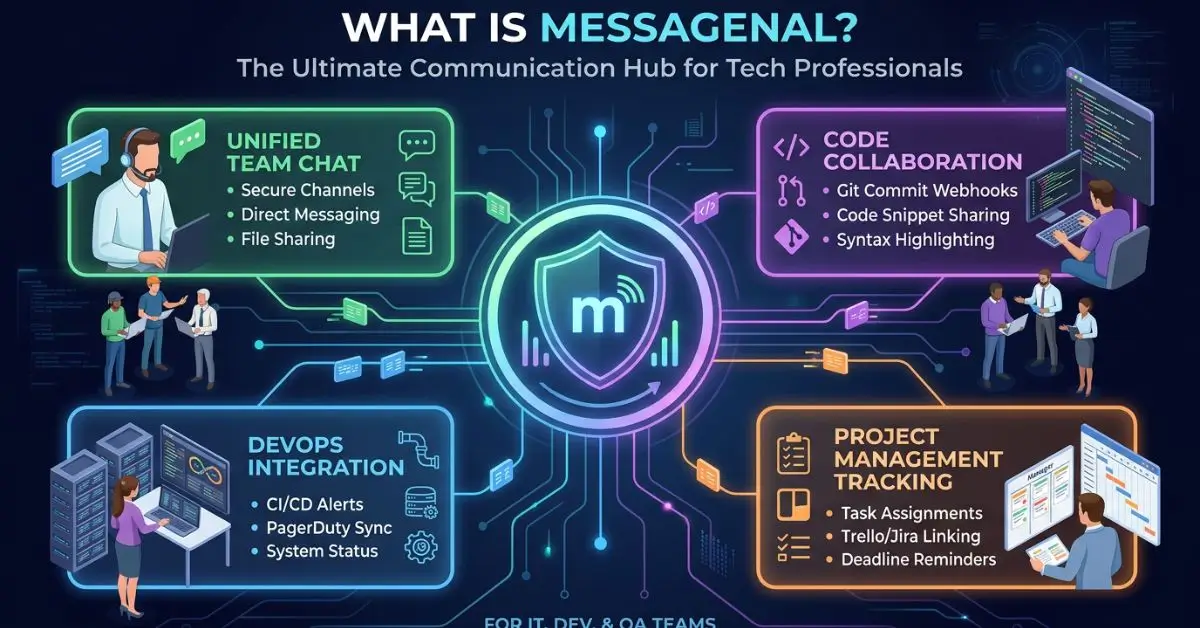
Messagenal refers to the structured approach used within digital communication systems to manage, route, and process messages across networks or platforms. It describes the complete lifecycle of a message — from creation and delivery to tracking, confirmation, and logging — making it a foundational concept in modern communication infrastructure and software design.
Quick Summary
Messagenal describes how digital messages are structured, managed, and delivered across technology systems. It is relevant in software development, enterprise platforms, IoT networks, and API design. Understanding this concept helps developers and product teams build more reliable, scalable communication systems.
Why This Concept Matters Right Now
Digital communication is no longer simple. A single customer interaction on a platform like Salesforce might trigger dozens of backend messages — routing requests, confirmation signals, log entries, error checks — all happening in milliseconds.
When those processes are poorly designed, things break quietly. Data goes missing. Users get duplicate notifications or none at all. Support teams chase bugs that are nearly impossible to trace.
This is the problem that structured message management solves. It gives every message a clear identity, a defined path, and a predictable outcome. That kind of reliability is what separates amateur-level systems from production-grade infrastructure.
The Core Components of Structured Message Management
Whether you are looking at a simple notification system or a complex enterprise platform, good message handling shares the same core elements.
Message Creation and Formatting
Every message starts with structure. In well-designed systems, a message is not just raw text or data — it includes metadata. Things like sender ID, timestamp, message type, priority level, and destination are all attached before the message starts moving.
This structure tells the system exactly what to do before any processing begins. Without it, systems have to guess — and guessing at scale leads to errors.
A basic example: when a user submits a support ticket on a platform like Zendesk, the system immediately attaches metadata to that request — category, urgency level, customer ID, and routing rules. That structured approach is message formatting in action.
Intelligent Routing
Once a message is created, it needs to go somewhere specific. Routing is the process of deciding the path it takes, how fast it moves, and which service or endpoint receives it.
In large-scale systems, this is far more complex than it sounds. A single request might pass through multiple microservices, load balancers, and API gateways before reaching its destination. Smart routing rules make sure it gets there without delay or misdirection.
Delivery Confirmation and Tracking
Sending a message is not the same as delivering it. Reliable systems include confirmation mechanisms — signals that tell the sender whether the message arrived, was received, or was acted upon.
This is the technical version of read receipts, but at an infrastructure level. In critical systems like healthcare or financial platforms, this confirmation is not optional — it is a compliance requirement.
Error Handling and Retry Logic
What happens when delivery fails? Strong systems do not silently drop messages. They have retry logic, fallback routes, and alert mechanisms built in.
Without this, a single network hiccup can cause data loss that takes hours to discover and fix. With it, the system automatically retries, escalates, or notifies — keeping operations running smoothly.
Logging and Audit Trails
Many industries require a full record of every message that passed through a system. Even outside regulated industries, logging is critical for debugging, analytics, and understanding how your system behaves under load.
Good logging is organized, searchable, and secure — not just a dump of raw data nobody can use.
Real-World Applications Across Industries
These principles show up across many different technology environments.
Enterprise Communication Platforms
Tools like Microsoft Teams, Slack, and internal business platforms all rely on structured message handling under the hood. Every notification, channel update, or file share triggers a set of backend processes that manage delivery, storage, and user state.
API and Microservices Architecture
Modern software is built from many small, independent services that need to communicate constantly. Message queues and event-driven systems — like Apache Kafka or RabbitMQ — are direct applications of structured communication design. Each service sends and receives clearly defined messages, and the system manages order, flow, and reliability.
IoT Networks
In Internet of Things environments, thousands of devices send data continuously. Managing all of that traffic requires a strong communication layer. Protocols like MQTT — widely used in smart home devices and industrial sensors — are built around lightweight, efficient message handling at scale.
Customer Support and CRM Systems
In the US, platforms like HubSpot and Salesforce handle millions of customer interactions daily. Every email, live chat session, or support ticket flows through a system that processes, routes, and logs communication automatically. That is structured message management working in a business context.
Healthcare and Financial Systems
In regulated industries, how messages are handled is a legal matter, not just a technical one. Healthcare systems use messaging standards like HL7 and FHIR to exchange patient data securely. Financial platforms rely on auditable, tamper-proof message flows for transactions. Both fields demand the highest level of reliability and traceability.
Traditional Messaging vs. Structured Message Frameworks
| Feature | Basic Messaging | Structured Framework |
|---|---|---|
| Message Format | Raw text or data | Structured with metadata |
| Routing | Simple or manual | Intelligent, rule-based |
| Error Handling | None or limited | Built-in retry and fallback |
| Delivery Tracking | Minimal | Full confirmation system |
| Scalability | Low to medium | High |
| Compliance Support | Rarely included | Logging and audit trails |
This comparison shows clearly why basic messaging breaks down as systems grow. The more complex your platform becomes, the more you need a structured approach to communication flow.
Mistakes Developers Make With Message Systems
Even experienced engineers make avoidable mistakes when designing communication systems. Here are the most common ones.
Not validating messages on arrival — Accepting messages without checking format or content causes downstream errors that are hard to trace. Always validate before processing.
No plan for failure — If your system has no retry logic or error handling, you will eventually lose data silently. Design for failure from day one.
Underestimating scale — A system that handles 500 messages per minute may completely collapse at 500,000. Build with future load in mind, even if you are starting small.
Weak logging — Poor logs make debugging almost impossible and put you at risk in regulated industries. Log what you need — and make sure it is readable and searchable.
Tight coupling between services — When services depend too heavily on each other’s message formats, one change breaks everything. Loose coupling and clear message contracts prevent this.
Why Product Teams Should Care Too
This is not just a developer concern. Anyone making decisions about product features that involve communication — notifications, alerts, in-app messages, system events — benefits from understanding how message handling works.
Asking the right questions early saves expensive rework later:
- How will this message be structured and identified?
- What happens if it fails to deliver?
- Do we need a record of it?
- How will users or systems know it was received?
These questions shape better product decisions and prevent common reliability problems before they reach users.
Conclusion
The idea behind messagenal is not complicated once you see the problem it solves. Every digital system that involves communication — which is nearly all of them — needs a clear strategy for how messages are created, moved, confirmed, and stored.
Without that strategy, systems become unreliable, hard to debug, and difficult to scale. With it, they become predictable, resilient, and far easier to maintain over time.
Whether you are a developer building something from scratch, a product manager designing features, or a tech enthusiast trying to understand how modern systems work — these principles are worth knowing. They sit at the foundation of almost every digital experience you use every day.
Frequently Asked Questions
What does messagenal mean in technology?
Messagenal is a structured framework used in digital systems to create, route, deliver, and manage messages across networks. It covers the full message lifecycle — from creation to confirmation — and is essential for building reliable communication infrastructure in modern software platforms.
How is messagenal different from basic messaging?
Basic messaging just sends and receives data. Messagenal adds structured formatting, smart routing, delivery confirmation, error handling, and logging on top of that. It is the difference between dropping a letter in a mailbox and using a tracked courier with built-in retry and delivery confirmation.
Why should developers understand this?
It helps them build systems that are more reliable, scalable, and easier to debug. Tools like Apache Kafka, RabbitMQ, and AWS SQS are built on these exact principles and used in production at companies of all sizes.
Is it relevant for small businesses or startups?
Yes. Even small apps benefit from structured message handling. Many cloud platforms offer ready-made message queue services, so small teams do not need to build infrastructure from scratch to apply these principles effectively.
What tools support structured message management?
Popular options include Apache Kafka for event streaming, RabbitMQ for message queuing, AWS SQS and SNS for cloud messaging, and MQTT for IoT devices. For customer-facing delivery, tools like Twilio and SendGrid handle routing, tracking, and analytics reliably.