

Introduction
Ever watched someone glide across the water with a sail in their hands and wondered what that incredible sport is called? Maybe you’ve seen those colorful sails dancing on the ocean and felt a pull to try it yourself. But where do you even start?
Windsurfing sits somewhere between sailing and surfing, offering an amazing blend of speed, freedom, and connection with nature. Unlike many water sports that require expensive boats or perfect waves, windsurfing gives you independence on the water with just a board and sail.
In this guide, you’ll learn exactly what sport windsurf is, how it works, what equipment beginners need, and realistic steps to get started safely. Whether you’re considering your first lesson or just curious about this dynamic water sport, you’ll find clear answers without confusing technical terms.
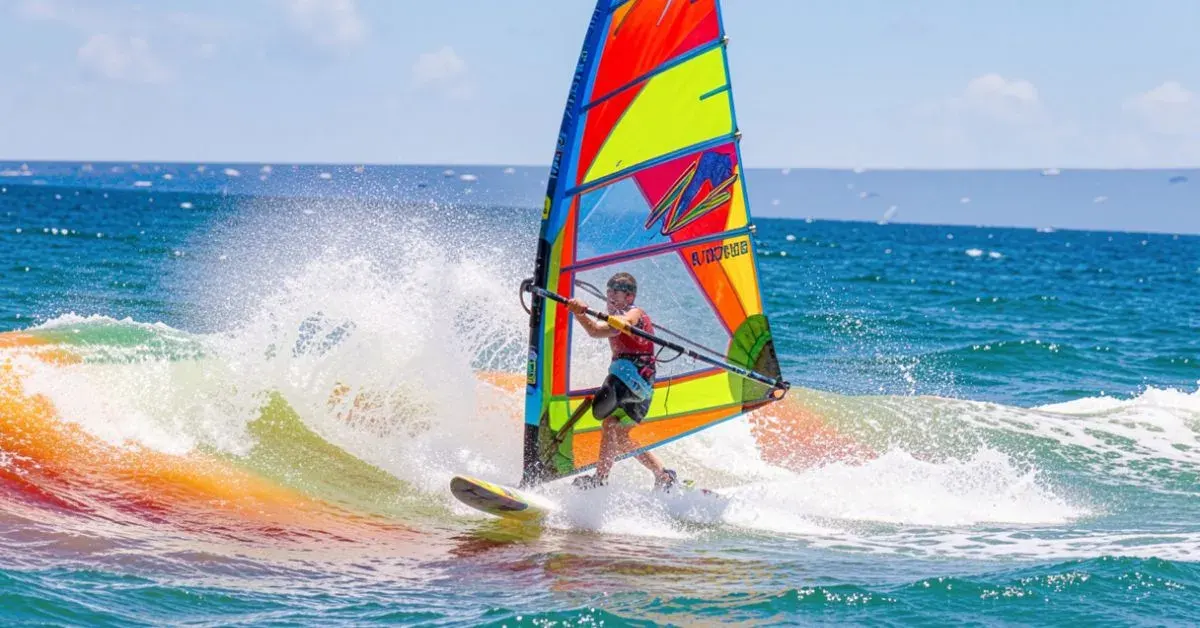
What is Sport Windsurf? Windsurfing (often called sport windsurf) is a water sport that combines elements of sailing and surfing. You stand on a board similar to a surfboard while holding onto a sail attached by a flexible joint. By shifting your body weight and adjusting the sail position, you harness wind power to move across the water, turn, and even jump waves.
TL;DR
Windsurfing is a water sport where you stand on a board and control a handheld sail to ride across water using wind power. Beginners can learn basics in 3-5 lessons. Essential gear includes board, sail, mast, and wetsuit (around $800-2,500 for starter packages). Best learning happens in steady winds (8-15 mph) on calm water. The sport offers excellent fitness benefits and works on lakes, bays, and ocean conditions.
Understanding the Sport of Windsurfing
Windsurfing emerged in the late 1960s when innovators combined surfboard designs with small sails. What started as a backyard experiment became an Olympic sport and remains popular across coastlines and lakes worldwide.
The beauty of this sport lies in its simplicity. You don’t need engines, perfect waves, or a large crew. Just wind, water, and your equipment.
Here’s how it works in practice: You stand on a buoyant board (usually 240-280cm long for beginners). A sail connects to the board through a universal joint that allows 360-degree movement. As wind fills the sail, you pull it toward you and lean back slightly, using your body weight as a counterbalance. The board moves forward, and you steer by tilting the sail forward or backward.
Unlike traditional sailing where you sit in a boat, windsurfing keeps you standing and actively engaged. Every gust requires adjustment. Every turn demands coordination. This creates an engaging physical and mental challenge.
Why People Choose Windsurfing
Water sports come in many forms, so what makes windsurfing special?
Independence on the water. Once you learn the basics, you can launch almost anywhere with suitable wind. No need to coordinate with teammates or wait for perfect wave conditions.
Full-body workout. Your core, legs, arms, and back all work constantly. Experienced windsurfers burn 400-1,000 calories per hour depending on wind conditions and intensity.
Scalable challenge. Beginners can enjoy gentle cruising in light winds. Advanced riders chase speed records, perform aerial tricks, or ride massive ocean swells. The same basic equipment adapts as your skills grow.
Connection with nature. You feel every shift in wind, read the water surface for gusts, and develop deep awareness of weather patterns. Many windsurfers describe an almost meditative state when conditions click.
Accessible locations. Any body of water with consistent wind works. Popular spots include Columbia River Gorge (Oregon/Washington), Corpus Christi (Texas), and the Great Lakes region, but thousands of lakes and bays support the sport.
Equipment Breakdown for Beginners
Let’s talk about what you actually need to get on the water, without the overwhelming technical specs.
The Board
Beginner boards are wide (75-85cm) and have high volume (140-180 liters), making them stable and forgiving. They float easily even when you’re standing still, giving you time to position the sail.
As skills improve, riders often switch to smaller, faster boards. But rushing this transition is the most common beginner mistake. A stable board builds confidence and accelerates learning.
The Sail
Sails are measured in square meters. Beginners typically start with 4.5-5.5m² in moderate winds. Smaller sails are easier to control but provide less power. Larger sails pull harder and require more strength.
Modern sails use durable materials like monofilm and dacron. They’re surprisingly light considering their power.
Mast and Boom
The mast is the vertical pole that supports the sail. The boom is the wishbone-shaped horizontal bar you grip. Together, they form the sail’s framework.
These components come in different materials. Fiberglass works fine for beginners and costs less than carbon fiber, which advanced riders prefer for weight savings.
Additional Essentials
- Wetsuit: Water temperature dictates thickness. Many US locations need at least 3/2mm (3mm torso, 2mm limbs) for comfortable sessions
- Harness: Hooks to the boom, letting you use body weight instead of arm strength for longer sessions
- Life jacket/flotation device: Required by law in many areas and smart for beginners
- Board bag and sail bag: Protect equipment during transport and storage
Cost Expectations
Let’s be honest about what you’ll spend.
Lessons: $60-150 per hour for private instruction, or $200-400 for weekend group courses. Three to five sessions give most people enough foundation to practice independently.
Gear packages for beginners: Complete used setups run $800-1,500. New beginner packages cost $1,800-2,500. Renting makes sense initially ($50-100 per day) until you’re certain about commitment.
Ongoing costs: Minimal compared to motorized water sports. Maybe $100-200 yearly for wetsuit replacement, line repairs, or sail patches.
Many windsurfers buy used equipment, learn maintenance skills, and keep costs reasonable. The sport doesn’t require constant upgrades unless you chase performance gains.
Learning Curve: What to Expect
Here’s what actually happens when beginners start windsurfing.
First lesson: You’ll likely spend time on land learning sail position and basic theory. In the water, expect to fall frequently while learning to pull the sail up from the water. Most people manage short rides by the end of a two-hour session.
Sessions 2-5: Balance improves noticeably. You’ll connect longer runs, start feeling wind shifts, and begin basic turns. Frustrating moments still happen, but successful stretches increase.
10-15 hours total: Many riders reach a comfortable cruising level. You can launch independently, handle moderate winds, and return to your starting point reliably.
Beyond basics: Advanced skills like planing (when the board skims across the water surface at higher speeds), jumping, and riding in strong winds take seasons of practice. But you don’t need these for enjoyment.
The sport rewards persistence. Unlike surfing where wave conditions limit practice time, you can windsurf whenever wind appears, accelerating skill development.
| Skill Level | Typical Time Investment | What You Can Do | Suitable Wind Conditions |
|---|---|---|---|
| Beginner | 0-10 hours | Pull sail up, short rides, basic steering | 8-12 mph, flat water |
| Intermediate | 10-50 hours | Consistent cruising, basic turns, controlled jibes | 10-18 mph, small chop |
| Advanced | 50+ hours | Planing, jumps, strong wind riding, wave sailing | 15-30+ mph, varied conditions |
Safety Fundamentals
Water sports demand respect. Here’s how to stay safe while learning.
Always check weather. Wind forecasts tell you if conditions suit your skill level. Beginners should avoid gusty, offshore winds (blowing from land toward water) that can push you dangerously far from shore.
Stay in designated areas. Many beaches have zones for different activities. Respect these to avoid collisions with swimmers or boats.
Use proper flotation. Your board provides some flotation, but a life jacket or impact vest adds security, especially when learning.
Know your limits. Feeling tired? Come in. Winds picking up beyond your comfort? End the session. The water will be there tomorrow.
Learn self-rescue. Know how to de-rig your sail and paddle the board if winds die or equipment breaks. Instructors teach this early.
Never go alone when starting. Having someone on shore who knows your plan provides a safety net.
The windsurfing community takes safety seriously. Experienced riders generally help newcomers and share local knowledge about conditions and hazards.
Best Conditions for Beginning
Not all wind and water combinations work well for learning.
Ideal wind: Steady 10-15 mph. Consistent speed lets you practice techniques without sudden overpowering gusts. Onshore wind (blowing from water toward land) is safest since it pushes you toward shore if you tire.
Water type: Flat or small chop. Lakes, bays, and protected ocean areas work better than open ocean with large swells. Waist-to-chest-deep water near shore gives you a safe practice zone.
Temperature: Beginners spend time in the water while learning, so warm conditions or proper wetsuits matter for comfort and safety.
Crowds: Less crowded areas reduce collision risk and performance pressure while you’re finding your balance.
In the US, beginners often start at spots like Lake Michigan beaches, San Francisco Bay’s calmer sections, or Florida’s Gulf Coast. These locations offer consistent conditions and rental facilities.
Finding Instruction
While some athletes teach themselves, professional instruction dramatically shortens the learning curve for windsurfing.
What good instruction provides:
- Proper technique from the start, avoiding bad habits
- Safety knowledge specific to local conditions
- Equipment appropriate for your size and skill level
- Encouragement during frustrating moments
- Faster progression, making early sessions more enjoyable
Where to find instructors:
- Windsurf shops near popular spots typically offer lessons
- Recreation programs in coastal cities often include windsurfing
- US Windsurfing Association lists certified instructors
- Resort locations sometimes bundle lessons with vacation packages
Group vs. private lessons: Groups cost less and create a social atmosphere. Private instruction offers personalized attention and faster skill building. Many people start with a private session to learn fundamentals, then join groups for practice and community.
Ask instructors about their certification, teaching experience, and typical student progression. Good instructors match their approach to your learning style and physical abilities.
Physical Demands and Fitness Benefits
Windsurfing provides a serious workout, but you don’t need athlete-level fitness to start.
What the sport works:
- Core muscles: Constant balance and sail control engage your entire midsection
- Legs and glutes: Maintain your stance and absorb chop
- Upper body: Pull the sail, adjust position, and control power
- Cardiovascular system: Active sessions elevate heart rate similar to moderate running
Fitness requirements for beginners: Basic ability to swim, reasonable balance, and enough upper body strength to pull the sail from the water repeatedly. Most people build sport-specific strength quickly through practice.
Benefits beyond muscle: Improved balance, better coordination, increased endurance, and enhanced spatial awareness. Mental benefits include stress reduction and improved focus.
Many windsurfers notice improved posture and core strength in their daily lives. The sport’s demands create functional fitness that translates beyond the water.
Common Beginner Challenges
Every windsurfer faces these hurdles. Knowing they’re normal helps you push through.
Pulling the sail up repeatedly. Early sessions involve lots of falls. Each requires pulling a wet sail from the water using proper technique (legs, not just arms). This exhausts beginners but gets easier fast as you fall less and develop strength.
Reading the wind. At first, wind seems random. With practice, you’ll spot gusts on the water surface, feel shifts through the sail, and position yourself accordingly.
The first jibe (turn). Turning around to head back feels awkward initially. The sail switches sides, you shift foot position, and timing matters. Expect many splashes before this clicks.
Managing fear. Speed increases as skills improve. Some people feel uncomfortable at first. Starting in light winds and gradually building comfort works better than forcing yourself into scary conditions.
Equipment overwhelm. Rigging the sail properly, adjusting components, and maintaining gear seem complicated at first. Instructors and experienced friends demystify this quickly.
Patience matters enormously. Windsurfing rewards consistent practice more than natural talent. The riders who progress are those who accept early struggles and keep showing up.
Windsurfing Culture and Community
The sport creates a distinct community you’ll notice immediately.
Beach launches often involve friendly nods and shared weather observations. Experienced riders help newcomers rig equipment or offer tips on conditions. This welcoming atmosphere makes learning less intimidating.
Local spots develop their own culture. Some focus on speed and performance, others on casual cruising and socializing. Finding your tribe enhances enjoyment.
Online communities share forecasts, sell used gear, organize group sessions, and provide endless advice. Forums and social media groups connect windsurfers regionally and nationally.
Events range from casual beach meetups to competitive races and freestyle contests. Participation is optional, but they offer chances to watch skilled riders and gain inspiration.
Environmental awareness runs strong in windsurfing culture. Since the sport depends on clean water and natural wind, many participants actively support conservation efforts.
Windsurfing vs. Other Water Sports
How does this compare to related activities?
Windsurfing vs. Kiteboarding: Kiteboarding uses a large kite instead of a handheld sail, offering more aerial potential but requiring more space and presenting higher risks. Windsurfing has a gentler learning curve and works in smaller areas.
Windsurfing vs. Stand-up Paddleboarding (SUP): SUP is easier to learn and works without wind, making it more accessible. Windsurfing offers more speed, excitement, and dynamic challenge.
Windsurfing vs. Traditional Sailing: Sailing accommodates groups and provides shade/rest between tacks. Windsurfing is more physical, requires less space, and offers a more intimate connection with conditions.
Windsurfing vs. Surfing: Surfing depends on waves and has its own challenging learning curve. Windsurfing works on flat water with just wind and provides more consistent riding time per session in many locations.
Each sport has merits. Many water enthusiasts dabble in several, but windsurfing’s unique blend of accessibility, challenge, and independence keeps dedicated followers engaged for decades.
Getting Started: Practical First Steps
Ready to try windsurfing? Here’s your action plan.
Step 1: Research local spots and schools. Search “windsurfing lessons [your city]” or check nearby lakes and coastlines for windsurf activity.
Step 2: Book an introductory lesson or beginner course. Budget $200-400 for a weekend workshop that includes equipment rental.
Step 3: Wear comfortable clothes you don’t mind getting wet, bring sunscreen, and prepare to spend time in the water. Most schools provide wetsuits if needed.
Step 4: After instruction, decide whether the sport resonates. If yes, continue lessons or rent equipment for practice sessions.
Step 5: Connect with local windsurfers through shops, clubs, or online groups. Ask about used gear options if you’re ready to buy.
Step 6: Commit to regular practice. Even just a few hours monthly during windy season builds skills steadily.
Don’t rush equipment purchases. Many enthusiastic beginners buy too early, then realize their needs differ from initial assumptions. Renting or borrowing for your first season makes sense.
Conclusion
Windsurfing offers something special: the independence to harness natural forces and glide across water under your own skill and judgment. The learning curve has challenges, but thousands of ordinary people discover this sport each year and find it deeply rewarding.
You don’t need perfect conditions, elite fitness, or massive budgets to start. Just curiosity, access to wind and water, and willingness to accept some early splashes. The sensation of your first sustained ride—when everything clicks and you’re actually sailing across the water—makes every awkward moment worth it.
If you’ve been thinking about trying windsurfing, take the simple step of booking an introductory lesson. Give yourself a genuine chance to experience what makes this sport captivating. The water’s waiting.
Ready to explore more water sports and outdoor adventures? BlogNex brings you expert insights on activities that get you moving, learning, and connecting with the world around you. Check out our latest guides and find your next challenge.
Frequently Asked Questions
How long does it take to learn sport windsurf basics?
Most beginners need 3-5 lessons (about 8-15 hours total) to cruise comfortably in moderate winds and perform basic turns. Individual factors like prior board sports experience, fitness level, and practice frequency affect how quickly you progress.
Can you windsurf if you’re not super strong?
Yes, absolutely. Technique matters far more than raw strength. Proper body positioning lets you use your weight to balance the sail’s power rather than muscling it around. Beginning with appropriately sized equipment makes learning manageable for people of all sizes and strength levels.
What wind speed is best for learning windsurfing?
Steady 10-15 mph winds work best for beginners. This provides enough power to move consistently without overpowering you or creating difficult conditions. Consistent speed matters more than the exact number—gusty conditions challenge even experienced riders.
Is windsurfing dangerous for beginners?
When practiced responsibly with proper instruction and equipment, windsurfing carries manageable risks similar to other water sports. Dangerous situations typically involve poor decision-making like going out in conditions beyond your skill level or ignoring weather warnings. Following safety guidelines and respecting your limits keeps risks low.
Do you need ocean access to try windsurfing?
Not at all. Lakes, reservoirs, and bays work perfectly and often provide better learning conditions than the ocean. Any body of water large enough for consistent wind supports the sport, and many landlocked US states have thriving windsurfing communities.
How much does beginner windsurfing equipment cost?
Complete used beginner packages typically run $800-1,500, while new equipment costs $1,800-2,500. Renting costs $50-100 per day at most locations and makes financial sense for your first season while you determine commitment level.